Lets Defend - SOC Event ID 238

SOC153 -Suspicious Powershell Script Executed -Malware
Security Incident Report – Suspicious PowerShell Execution (SOC153)
1. Executive Summary
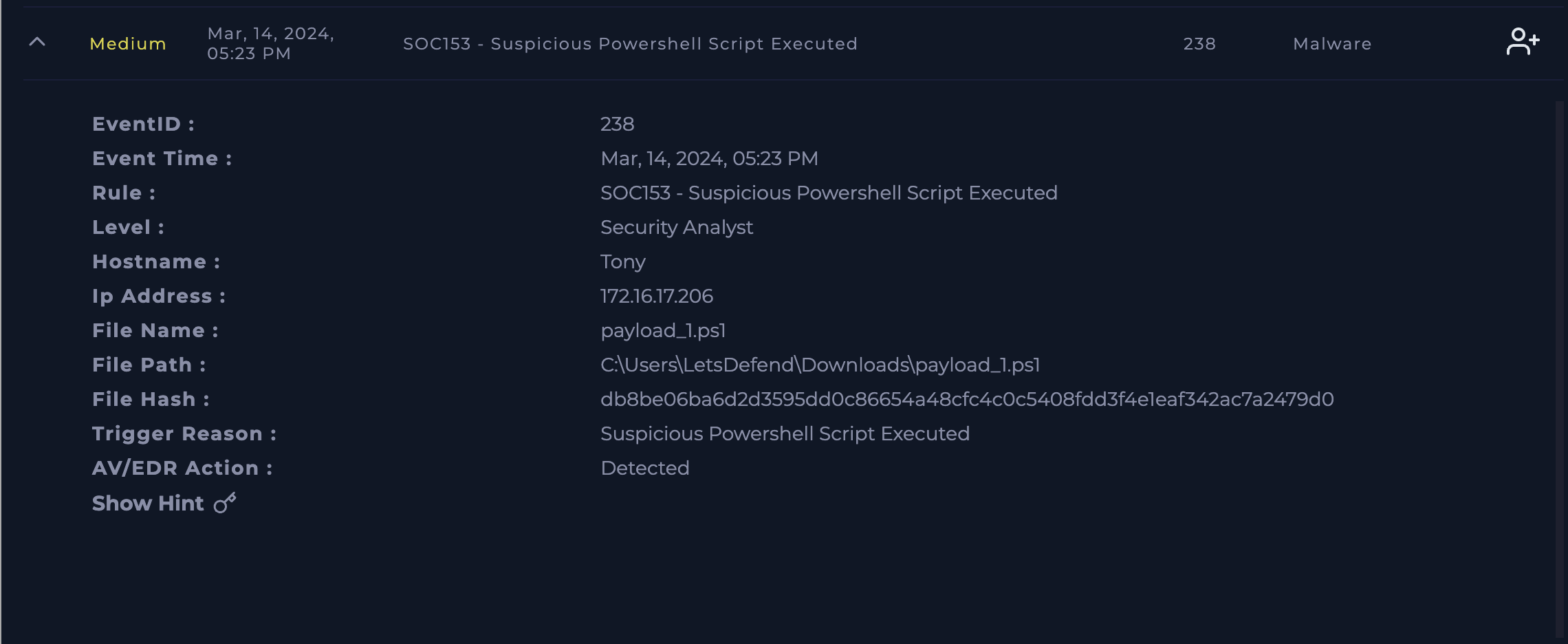
On March 14, 2024, at 05:23 PM, a security alert (SOC153 – Suspicious PowerShell Script Executed) was triggered on host Tony. The alert indicates execution of a potentially malicious PowerShell script (payload_1.ps1) from a user download directory.
Analysis confirms that the script is malicious, associated with external command-and-control (C2) communication, and was not quarantined by endpoint protection. Immediate remediation actions are required to prevent further compromise.
2. Incident Details
| Field | Value |
|---|---|
| Event ID | 238 |
| Alert Rule | SOC153 – Suspicious PowerShell Script Executed |
| Severity Level | Medium (Security Analyst Review Required) |
| Hostname | Tony |
| IP Address | 172.16.17.206 |
| Event Time | Mar 14, 2024 – 05:23 PM |
| File Name | payload_1.ps1 |
| File Path | C:\Users\LetsDefend\Downloads\payload_1.ps1 |
| File Hash (SHA-256) | db8be06ba6d2d3595dd0c86654a48cfc4c0c5408fdd3f4e1eaf342ac7a2479d0 |
| EDR Status | Detected (Not Quarantined) |
3. Threat Indicators (IOCs)
File Indicators
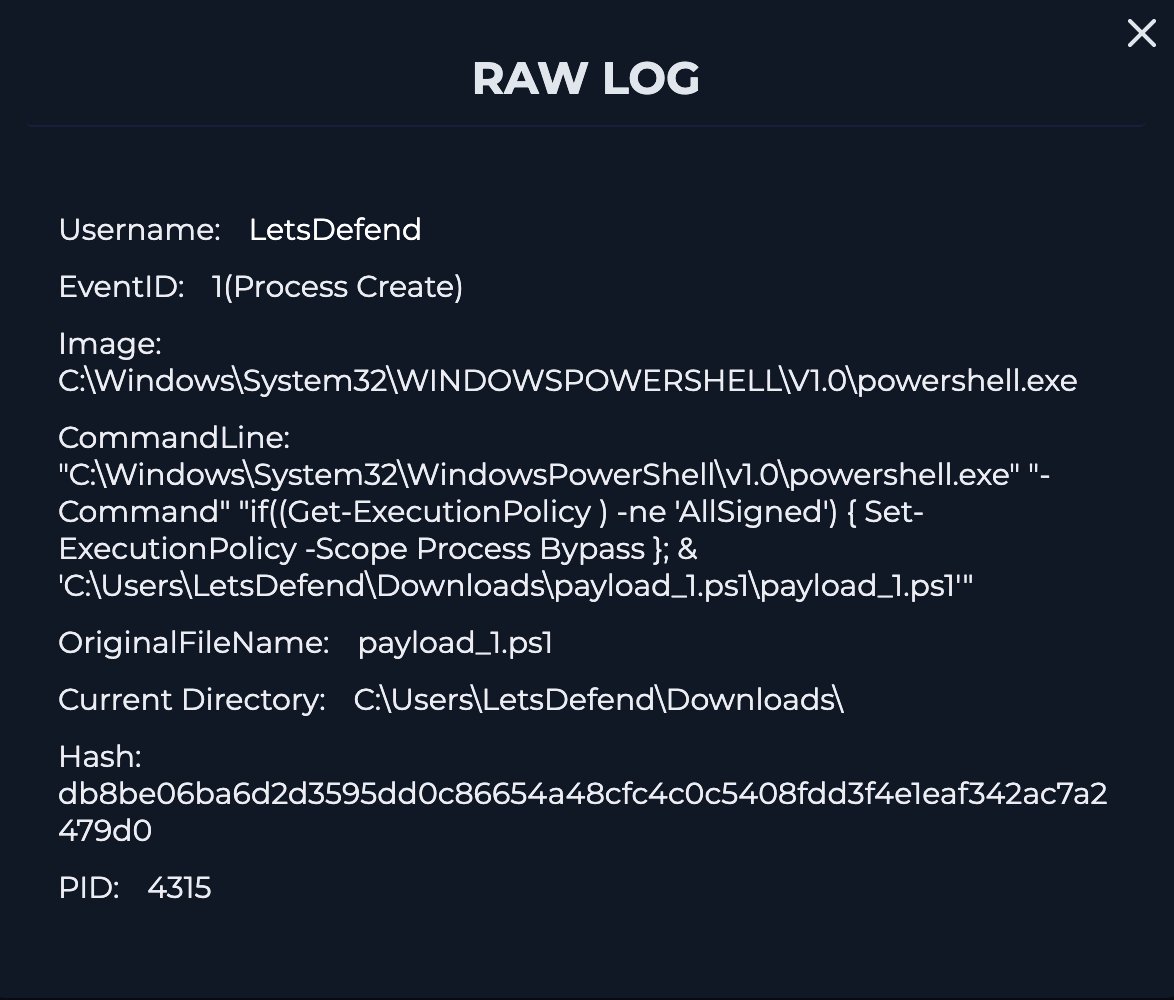
- File Name: payload_1.ps1
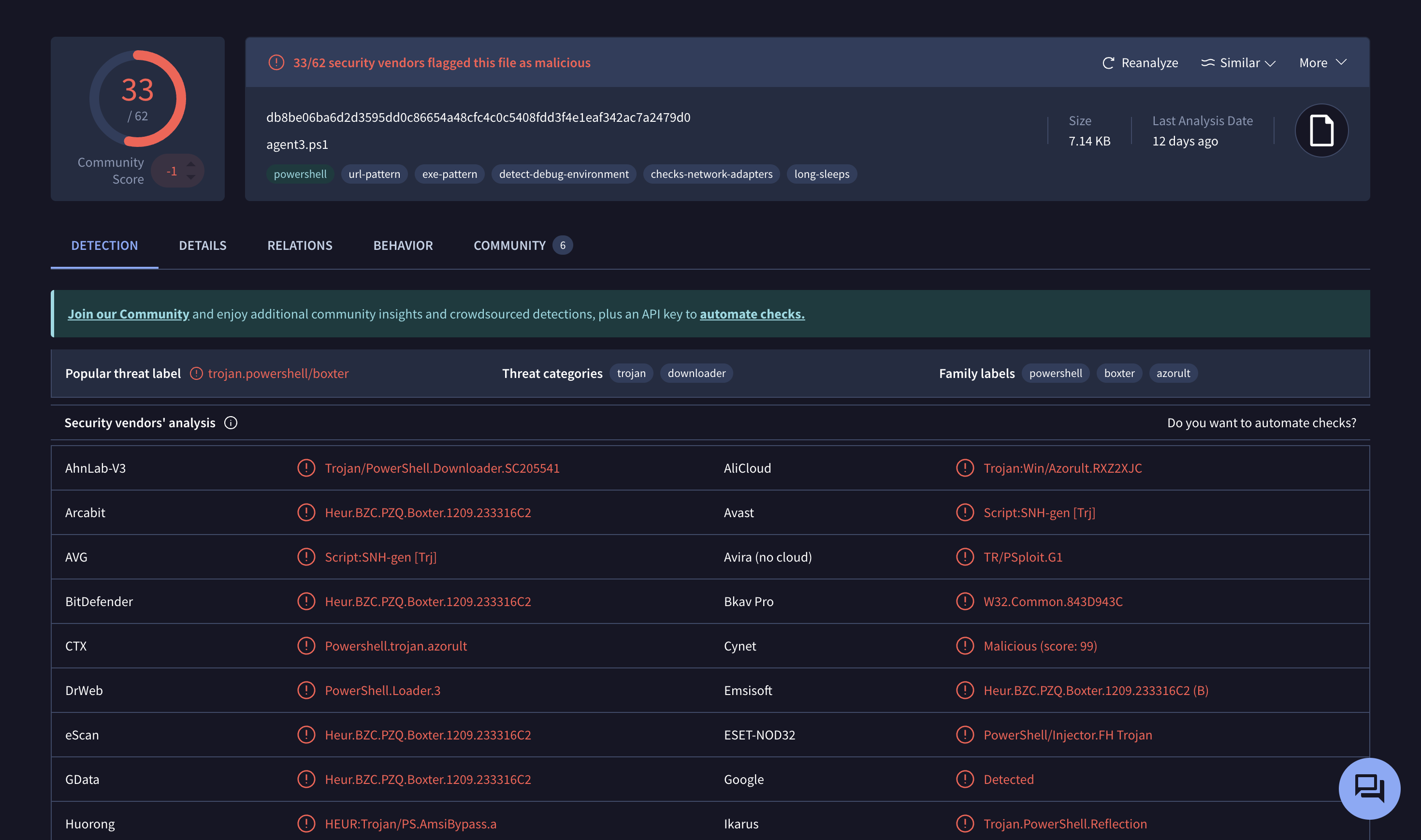
- SHA-256 Hash: db8be06ba6d2d3595dd0c86654a48cfc4c0c5408fdd3f4e1eaf342ac7a2479d0
Network Indicators
Malicious URL:
1
  http://91.236.116.163/INDEX.PHP?ID=90059C37-1320-41A4-B58D-2B75A9850D2F&SUBID=9G6CLLE6
Command & Control (C2) IPs:
- 3.5.130.147
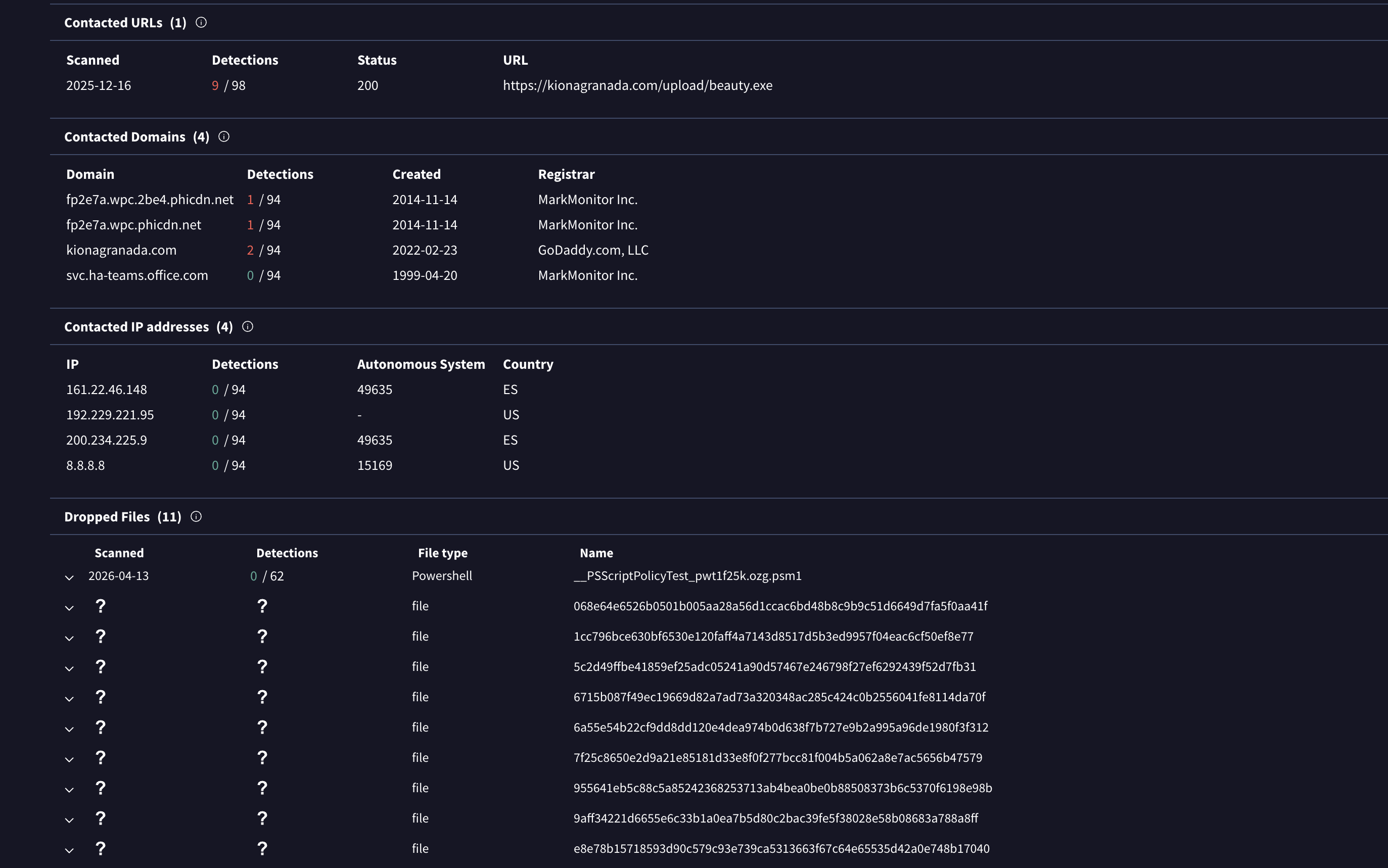
- 161.22.46.148:443 (kionagranada.com)
4. Analysis Summary
4.1 Behavioral Analysis
- The PowerShell script was executed from a user download directory, a common attacker technique.
- PowerShell is frequently abused for:
- Downloading secondary payloads
- Establishing persistence
- Communicating with remote C2 servers
4.2 Malware Analysis Findings
Using third-party tools such as:
VirusTotal
- Hybrid Analysis
- Any.Run
The file was flagged as malicious/suspicious, confirming:
- External communication attempts
- Indicators of downloader/backdoor behavior
Possible data exfiltration or remote command execution capability
4.3 Network Activity
- The script attempted communication with known malicious infrastructure.
- HTTPS traffic over port 443 suggests encrypted C2 communication, making detection harder.
5. Impact Assessment
| Category | Assessment |
|---|---|
| System Compromise | Likely |
| Data Exposure | Possible |
| Persistence Mechanism | Unknown (needs further investigation) |
| Lateral Movement Risk | Medium |
| Detection Evasion | Possible (PowerShell abuse + encryption) |
6. MITRE ATT&CK Mapping
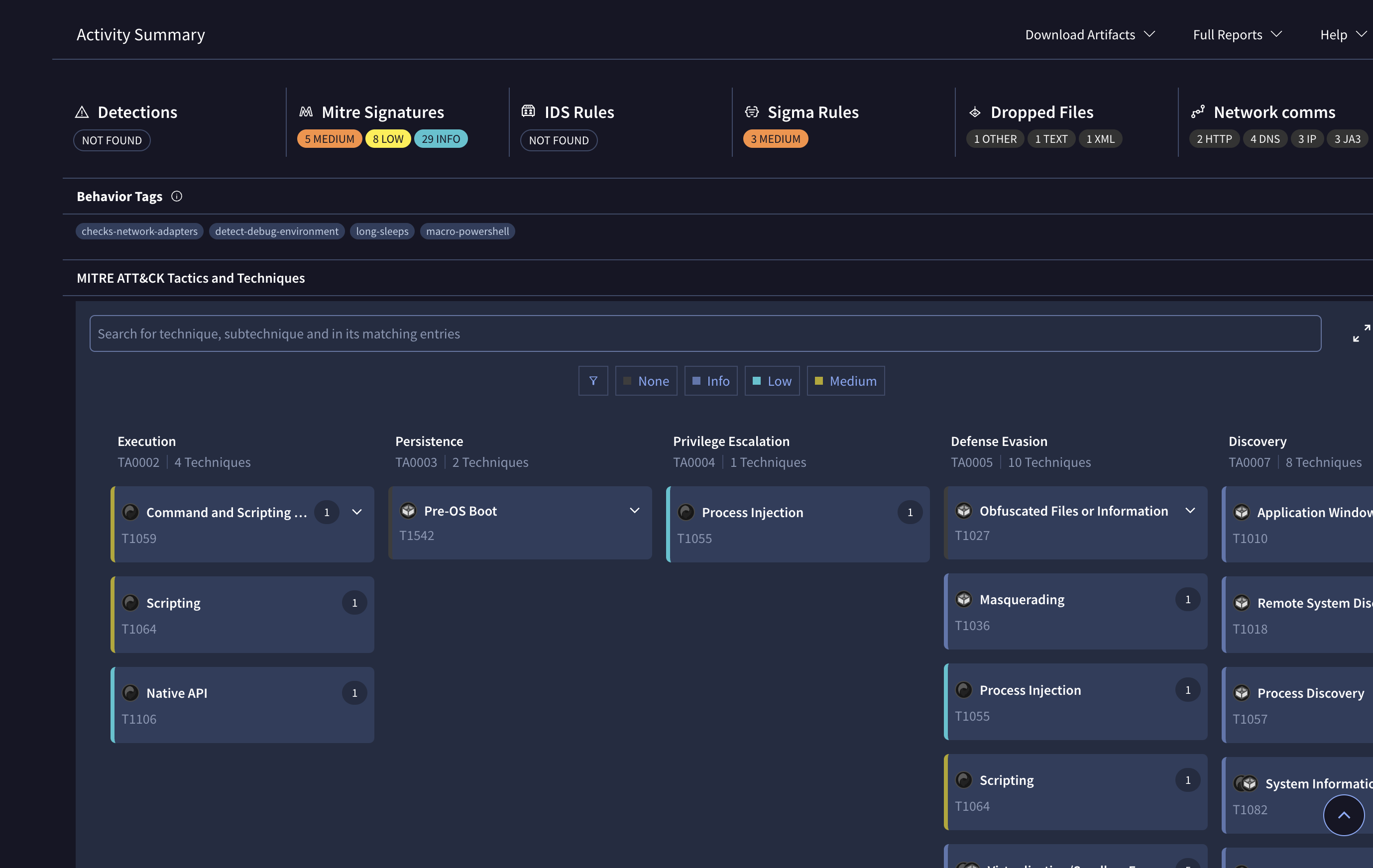
| Technique | Description |
|---|---|
| T1059.001 | PowerShell Execution |
| T1105 | Ingress Tool Transfer |
| T1071.001 | Web Protocol (HTTP/HTTPS C2 Communication) |
| T1027 | Obfuscated/Encrypted Payloads |
7. Root Cause Analysis
The infection likely originated from:
- User downloading a malicious script from an untrusted source
- Lack of PowerShell execution restrictions
- Endpoint protection detecting but not blocking the threat
8. Response Actions Taken
- Alert reviewed and validated as true positive
- Malware identified via hash and behavioral analysis
- Indicators extracted for further containment
9. Recommended Actions
Immediate Actions
- Isolate the affected host (Tony) from the network
Manually remove the malicious file:
1
  C:\Users\LetsDefend\Downloads\payload_1.ps1
- Block all identified IOCs:
- IP addresses
- Domain (kionagranada.com)
- Malicious URL
Short-Term Actions
- Perform full antivirus/EDR scan
- Check for persistence mechanisms:
- Scheduled tasks
- Registry run keys
- Review PowerShell logs (Event ID 4104)
Long-Term Actions
- Enforce PowerShell execution policies (e.g., Restricted/AllSigned)
- Enable advanced logging:
- Script Block Logging
- Module Logging
- Conduct user awareness training
- Deploy network-level threat blocking (IDS/IPS)
10. Conclusion
The alert represents a confirmed malicious PowerShell execution attempt involving external command-and-control communication. The lack of automatic quarantine increases the risk of compromise.
Prompt containment and remediation are critical to prevent:
- Further system compromise
- Potential lateral movement
- Data exfiltration